The 1-3-5 Method: A Simple Framework for Daily Productivity
Feeling overwhelmed by your to-do list? You're not alone. The average professional has 150+ tasks on their list at any given time. That's not a productivity system - it's a recipe for anxiety.
The 1-3-5 Method is a simple, research-backed approach to daily task management that cuts through the noise. Instead of an endless list, you commit to completing just 9 carefully chosen tasks each day:
Big Task
Most important
Medium Tasks
Important supporting work
Small Tasks
Quick wins
Why 9 Tasks? The Science Behind the Method
The 1-3-5 method isn't arbitrary. It's grounded in cognitive science:
Cognitive Load
Research shows our working memory can effectively process 7±2 items at once. By limiting your daily tasks to 9, you're working with your brain, not against it.
Decision Fatigue
Every choice you make depletes your mental energy. Pre-selecting 9 tasks eliminates dozens of micro-decisions about "what to work on next" throughout your day.
Completion Psychology
Finishing tasks triggers dopamine release. The 1-3-5 structure virtually guarantees you'll complete multiple tasks daily, creating positive momentum and motivation.
How to Implement the 1-3-5 Method
Step 1: Choose Your 1 Big Task
Your Big Task is the single most impactful thing you can accomplish today. Ask yourself:
- What task, if completed, would make today feel successful?
- What am I avoiding that actually matters most?
- What moves a key project forward significantly?
Schedule your Big Task for when your energy is highest - usually morning for most people.
Step 2: Select 3 Medium Tasks
Medium tasks are important supporting work. They keep projects moving and often unblock other people. Good medium tasks:
- Advance ongoing projects
- Prepare for upcoming deadlines
- Involve some thought but don't require deep focus
Step 3: Add 5 Small Tasks
Small tasks are quick wins you can knock out in 15 minutes or less:
- Respond to that email
- Make that phone call
- Review that document
- Update that spreadsheet
These fill the gaps in your day and give you momentum between bigger work.
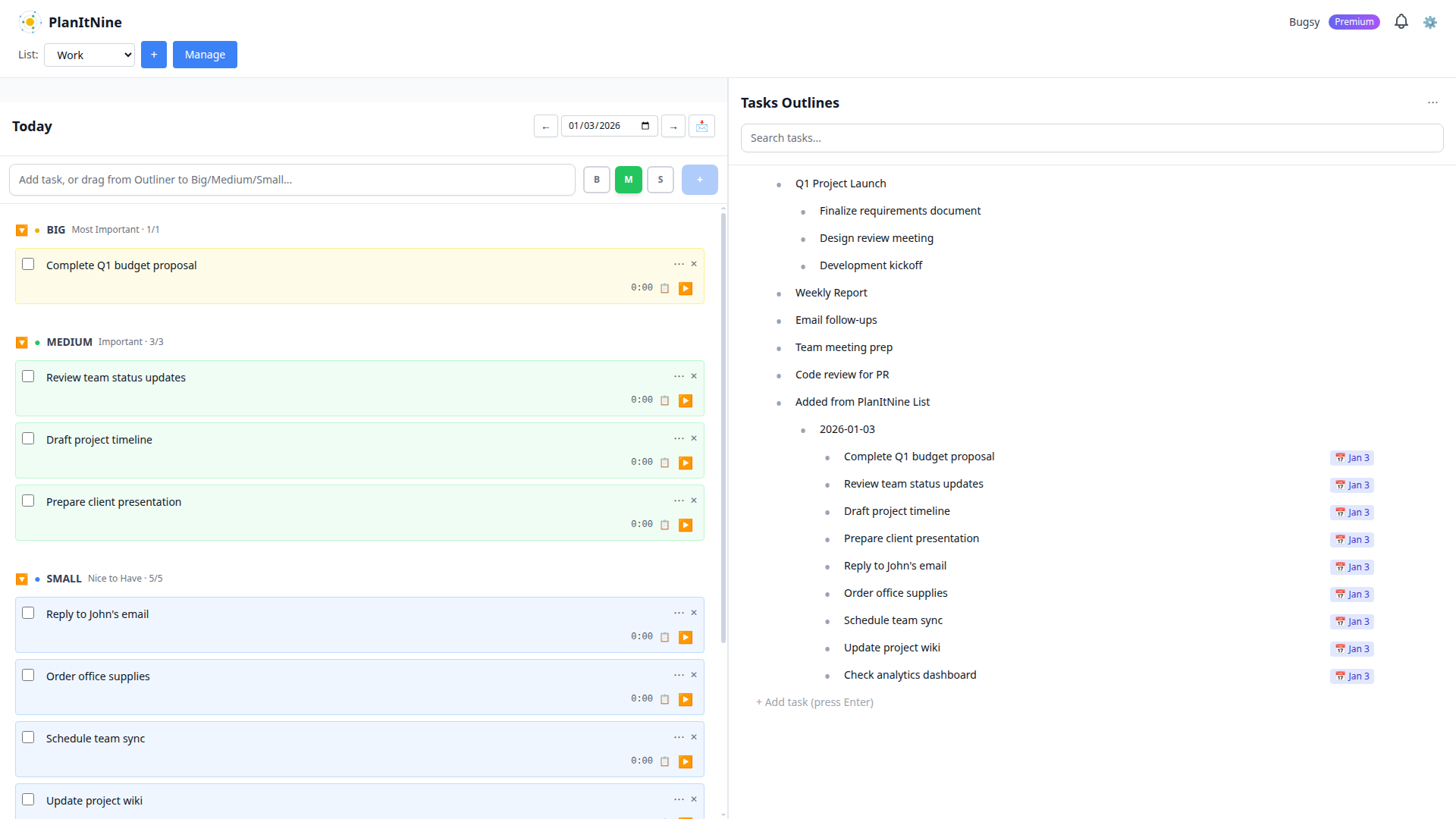
PlanItNine's daily board structures your day with the 1-3-5 method built in.
The Origins of the 1-3-5 Rule
The 1-3-5 method was popularized by Alex Cavoulacos, co-founder of The Muse. She discovered that limiting daily tasks to this simple structure dramatically improved her team's focus and completion rates.
"The 1-3-5 rule isn't about doing less - it's about doing what actually matters."
Flexibility Within Structure
The 1-3-5 framework is meant to guide, not restrict. On heavy meeting days, try 1-1-3. On deep work days, you might do 1-2-2. The principle remains: constrain to focus.
What matters is:
- Starting with a clear, limited list
- Prioritizing impact over quantity
- Completing what you start
Using PlanItNine for the 1-3-5 Method
PlanItNine is built specifically around the 1-3-5 method. Here's how it helps:
- Built-in structure: The daily board has Big, Medium, and Small sections with limits enforced
- Outliner for planning: Brain-dump everything into your Outliner, then drag tasks to today when ready
- Time tracking: See how long tasks actually take to improve future planning
- Carry-over: Incomplete tasks can be moved to tomorrow with one click
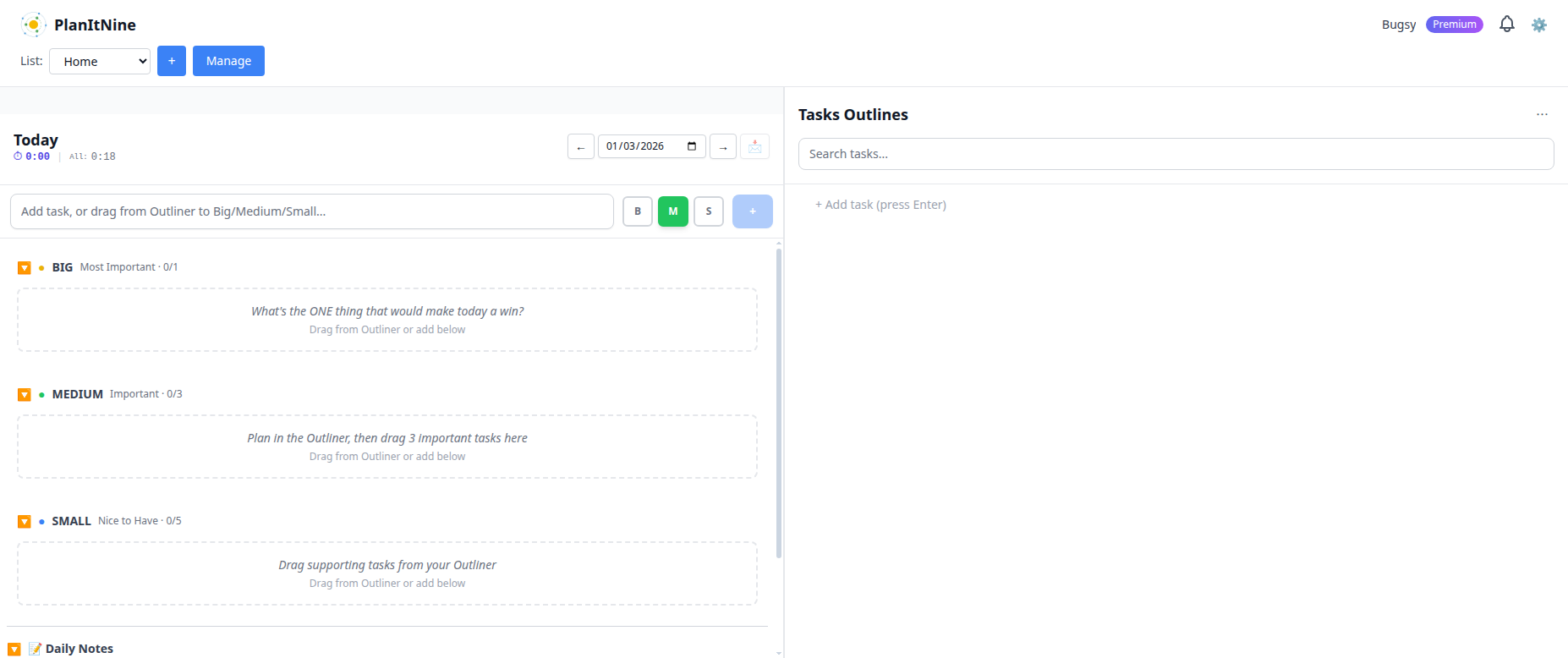
The daily board guides you to plan exactly 1 Big, 3 Medium, and 5 Small tasks.
User Story Placeholder
Add a real user testimonial about how the 1-3-5 method helped them reduce overwhelm and increase productivity. Include specifics: job role, previous struggles, transformation.
Common Questions About the 1-3-5 Method
What if I finish all 9 tasks early?
Celebrate! Then pull more from your Outliner if you want, or use the time for strategic thinking, learning, or rest. Finishing your list is the goal, not a problem.
What if a task takes longer than expected?
That's valuable information. Track your time to learn how long things really take. Move incomplete tasks to tomorrow - that's what the carry-over feature is for.
Does this work for people with ADHD?
Many users with ADHD report the 1-3-5 method helps tremendously. The clear structure and limited options reduce decision paralysis. The Big Task provides an anchor when focus wanders.
Can I use this with my team?
Yes! PlanItNine's email sharing lets you send your daily plan to managers or accountability partners. Recipients don't need an account - they just get a clean summary of your tasks.
Pro Tips Placeholder
Add 3-5 actionable tips from power users. Example topics: best time to plan your 1-3-5, how to batch small tasks, combining with Pomodoro technique.
Ready to Try the 1-3-5 Method?
PlanItNine makes it easy. The structure is built right in.
Start Free Today